



Guide to Custom Patches for Embroidered Sweatshirts
Introduction: Custom Patches for Embroidered Sweatshirts

When you are thinking of taking your wardrobe to the next level and embellishing your sweatshirt with your own patches, then you need to enter the world of creativity and craftsmanship. Yes, you may want the patches to be a mere accent or to be bold, but it will all depend on knowing how to make, apply, and style patches. This article takes you by the hand to all the details: how to make a custom patch, whether you should sew or iron-on, as well as whether and how RushPatch can assist you.
How and why people use custom patches for embroidered sweatshirts
Why are custom patches familiar with embroidered sweatshirts?
Customization of the Garments: The use of custom patches with embroidered sweatshirts is usually attributed to the fact that it provides a practical and convenient method of personalisation and customisation of the garment's design, whilst ensuring a high-quality item. Custom patches are sewn or heat-applied to the sweatshirt after they have been made, unlike direct embroidery, which entails using a sewing needle to create a pattern on the cloth.
Detailed Designs: The method enables a more detailed design, which may be complex and expensive or time-consuming using conventional embroidery. As an illustration, a patch may also be made in multi-layered designs, detailed logos, or a complex color gradient in high precision before it is applied to the sweatshirt, resulting in a professional and attractive look. Besides, patches are flexible to put up and can easily be swapped, removed, or changed in case there is a need, and this is especially beneficial to organizations, teams, or fashion brands that often change logos, slogans, or designs.
Longevity of Fabric: The other factor that has made custom patches popular is that they serve to ensure the integrity and longevity of the fabric used to make the sweatshirt. Direct embroidery may also result in puckering or distortion, particularly on stretchy or delicate fabric, whereas a patch prevents this by enclosing the stitching in an independent reinforced material. This not only ensures that the garment is protected but also that there is a consistent, high-quality embroidery, regardless of the material used or the thickness of the sweatshirt. In addition, patches provide a three-dimensional experience in a sweatshirt, which usually feels unique and stylish to customers. Production-wise, small to medium-sized orders may be cheaper to use patches since they can be produced in large quantities and only used when necessary to save on time and labor expenses, as opposed to embroidering every sweatshirt separately.
Simply put, the value of custom patches to embroidered sweatshirts is explained by the capacity to design such patches as a combination of appeal to the eye, utility, and efficiency in the production process. They give the designers and brands a versatile means to produce attention-grabbing, stylish, and personalized apparel, which satisfy tastes as well as business needs.
How are patches for embroidered sweatshirts created?

Patches for embroidered sweatshirts are made in a very arduous multi-phase process that is aimed at making them durable as well as striking to the eye. The process involves starting with digital art, in which the designers are then able to input the digital code into a special embroidery program, which translates the logo or drawing into a file that can be stitched. This process dictates the direction of the stitch, density, change of color, and layering, which are significant in the attainment of clean lines and depth in the end patch.
The base material, most often twill or felt or some tightly woven fabric, is also chosen by designers, as it should be solid enough to withstand thousands of stitches without becoming warped. After the design and materials have been determined, the file is loaded into a computerized embroidery machine that uses several needles and threads to create the patch, layer after layer.
At this step, variations of fine details like gradient shading, protruded 3D puff, or metallic thread may be added to increase the overall appearance and feel of the patch.
Once the embroidery is done, the patch goes into the finishing stage, which provides the patch with a glossy, lasting look and a ready fit. To most patches, a merrowed edge is applied - one of the traditional round thread borders sewn around the edge of the patch. With more complicated shapes, a heat-cut (laser-cut or hot knife) edge of the fabric is cut to give a clean edge that does not fray.
The second is the application of the backing, and this is different depending on the way the patch will be attached to the sweatshirt. Patch applications can be heat-sealed with the backing, or they can be sewn on, giving the maximum strength. Removable or interchangeable designs can also be done in Velcro backings.
All forms of backing provide structure, and the patch is less challenging to work with and less prone to wear. After backing and trimming, quality checks are then given to the patches to make sure that the stitches are tight, the colours are correct, and the edges are smooth. The bottom minute, ushered-in process leads to high-quality patches that not only survive the repeated wash and wear in a piece of clothing but also add elements of professionalism and eye appeal in the design of embroidered sweatshirts.
Application and Uses of Sweatshirt with Embroidered Patches

How to put patches on embroidered sweatshirts?
Patching sweatshirts that have been embroidered is a process that needs some time and should be done in stages in order to ensure that the patch has been securely attached, smooth, and attractive. The precise procedure is based on the nature of the support, heat-seal (iron-on), sew-on, or Velcro, but regardless, it all starts with appropriate positioning. First, the sweatshirt needs to be flattened on a clean and smooth surface to avoid the movement of wrinkles that affect the design. The patch is then stuck on the preferred location, with fabric chalk, or removable tape, usually used to indicate the exact location. The alignment could be checked twice, particularly on the chest part or the sleeves, which have even minimal unevenness that is visible. After the position is verified, the patch is temporarily held in place using fabric tape or pins to ensure that it will not move during attachment.
In the case of heat-seal patches or iron-on patches, applying heat will be done with the help of an iron or a heat press. The patch is covered with a protective cloth (i.e., a thin cotton towel or a piece of parchment paper) to make sure that the embroidery threads are not ruined. Heat is applied to a firm pressure in medium-high heat for 10-20 seconds at a time, which gives the heat-activated adhesive to attach to the sweatshirt fabric. One should not move the patch around by sliding the iron; pressing it down, up, and down, and applying it as necessary. The garment should then be allowed to cool after heating so that the adhesive bond establishes a solid bond. Nevertheless, as some sweatshirts may have heavy or rough material, most individuals embellish an iron-on patch by sewing around the edges afterwards to ensure lasting use.
In the case of sew-on, it is the stitching and not the heat that is given attention. You then sew around the edge of the patch, with a needle and strong polyester thread, in little, even stitches, by hand or machine. Hand sewing offers a higher level of control, particularly in the areas around curvy or irregular surfaces, and machine sewing provides the highest degree of strength. The sweatshirt material can be stitched taut to prevent the occurrence of puckering, and the needle must go through the patch and the garment without being excessively tight. When the stitching has been done, the thread is then knotted on the inside of the sweat jacket and trimmed.
Velcro-backed patches. This method is applied by sticking the loop side to the sweatshirt, typically sewn in. After attaching the loop panel, the patch with the hook back may then be stamped onto the panel and removed or changed. This is a common approach to uniforms, team products, or fashion items that need to be customized frequently. No matter the technique, the last part is examining the positioning, pressing the material, and giving the corners a gentle pull to make the patch well secured. Patches can be smoothly glued on embroidered sweatshirts with the correct technique and a lot of planning, so there is no loss in durability, and they can also be customized and styled.
Is it better to sew or iron-on a patch?

The decision between sewing or ironing a patch is more dependent on the purpose of the garment, the kind of patch, and the duration of the patch's wearability. The advantage of iron-on patches is that they have a heat-sensitive adhesive (heats up when the shockwave passes through it and the cloth is pressed by an iron or a heat press), and once the ironing is complete, the patch becomes permanent. This renders the application fast, neat, and easy to use for beginners. To use lightweight- On casual wear, like decorative patches, the adhesive has a satisfactory hold. Iron-on patches also have a smooth and flat look since no stitching is seen around the edges. The strength of an iron-on bond may, however, change with the thickness of the garment. The material in the form of sweatshirts can be either textured, stretchy, or thick, and this at times prevents the adhesive from being entirely absorbed by the fibers. The adhesive can become weak over time, either through washing, drying, or daily wear, causing the edges to lift or the patch to peel off.
It is much more durable, however, to sew a patch. At the same time, stitching holds the patch in place by the sweatshirt material, using a sewing machine makes it much less likely to lose its work, regardless of whether it has been washed several times or heavily used. Sew-on is especially useful with embroidered patches that are heavier and thicker. The patch can also be sewn to allow the patch to soften along with the garment without the use of heat-sensitive glue. Sewing is more time-consuming, skillful, and costly, but still, the surest solution for long-term wearing clothing, particularly workwear, uniforms, sports attire, or high-quality embroidered sweatshirts. The second is that sewing does not involve the danger of overheating the fabric, thus occasionally damaging the fabric (this may happen when using iron-on).
Iron-on patches will be simpler to apply and can be applied quickly, which is why they will be a good option in a casual or decorative way. Nevertheless, sewing offers a far more powerful, long-lasting, and reliable grip, particularly on heavier products such as sweatshirts. In the majority of the embroidered sweatshirts, sewing is the preferred material, and many individuals would tend to use a combination of both techniques, such as ironing first to position them before sewing on the edges as a way of ensuring maximum possible output.
How to DIY a Patch for an Embroidered Sweatshirt at Home

A patch embroidered sweatshirt is a good project to do at home in a DIY manner and allows you to personalize your own clothing without having to use specialized tools. The initial one is to pick or make your patch. They come in pre-made embroidered patches that you can purchase, and you can make them yourself if you have some basic embroidery materials. To create a bare DIY patch, draw your project onto a piece of fabric that is very durable (twill or felt), iron-on stabilizer to hold the back of your patch, and embroider your design with a hoop to keep the fabric in place. When that is done, cut the patch, either into an insignificant form or close to the chain of work, leaving a little margin to prevent the stitches from unraveling. To have the patch lie smoothly and to ensure that it will not be removed easily, you can add an adhesive surface, but it is optional in case you intend to sew it.
The second step is to prepare your sweatshirt to apply the patch in a clean and smooth way. Wash and dry the sweat garment first in order to eliminate the factory sizing or wrinkles. Place it on a table or an ironing board, flatten it, and place it there to determine where you desire to put the patch. The most popular spots are the upper chest, sleeve, pocket, or back. Place the mark mathematically and apply fabric chalk or painters' tape to mark the position, and confirm the positioning by holding up the sweatshirt in a mirror. When you are pleased, fasten the patch provisionally with pins or two small dots of washable glue. It is also essential to keep it flat so as to prevent the crooked edges or puckering when you permanently fix it.
The patch may be attached either through sewing or the iron-on method. In the case of iron-on patches, turn on your iron to medium-high heat with no steam, place the patch under a thin cloth, and iron it for 10-20 seconds. Repeat the lifting and pressing until the adhesive melts and attaches to the sweatshirt. Allow it to cool down, then transfer the garment. In case the fabric used in the sweater is heavy, then it is possible to iron inside to allow the adhesive to get through. In a completely DIY embroidery patch (no adhesive), the best option is to sew. Use a thick polyester thread and tie the end of the needle, and then with small and even stitches sew around the border of the patch. Pull the thread softly in order to have the patch flat but not tight to the extent that it puckers the sweatshirt. At the end of it, be sure to tie off the thread on the inside as well.
Lastly, test by pulling the work around and ensuring that the patch is firmly stuck. In case you applied iron-on adhesive, then strengthen the weak parts with the help of some hand stitches to become more durable. Once everything is in place, it is time to leave the sweatshirt to rest for a few hours before putting it on or washing it. In case you wash it, wash it in cold water and dry it in the air; this way, the patch will be able to last longer.
Types of Custom Patches for Embroidered Sweatshirts
Suede Elbow Patches for Embroidered sweaters

Embroidered sweaters can be embellished with suede elbow patches, which are both stylish and practical, to make them look more vintage and classy. These are usually crafted with genuine suede or imitation suede, and they are cut either in oval or rectangular form, capable of fitting loosely around the elbow.
Since suede is soft and velvety at the same time and can be worn in a natural way, it makes the sweater look better by adding another material, which is contrasting and which gives the shirt a high-quality and visually pleasing look. The patches may be sewn on the shirt, or may be attached to it using a fabric-safe adhesive, but stitching is the surest way to do this because of the weight and feel of suede. Combined with embroidery, be it a logo, monogram, or decorative pattern, the suede patches serve as a balancing factor to the appearance by providing an element of customization and a touch of heritage, as well.
A large number of new sweaters are made with deliberate suede patches on the elbows, which provide them with an old-fashioned, collegiate, or outdoor appearance, which makes all the difference and keeps them stylish all year round.
Suede elbow patches can be helpful and also decorative. They were conventionally attached to sweaters and jackets to stiffen parts that are likely to wear out, especially in clothing designed to be worn in the work environment, on the horse, or during outdoor pursuits. Elbows are some of the first areas to wear out on knitted sweaters through constant bending and rubbing, and suede patches significantly increase the life of the garment as they offer a high-quality surface that does not wear out easily.
However, in the modern day, though, they remain useful in terms of reinforcement; suede elbow patches are as much a trendy detail as ever. They offer visual contrast, bring out the structure of the sleeve, and give an added sophistication that brings even plain embroidered sweaters to a higher level. Elbow patches made of suede can be worn over new garments or used to fix any worn patches. Suede elbow patches are a timeless, practical, and stylistically versatile addition to embroidered knitwear.
Quilt Patch for Embroidered Sweatshirt
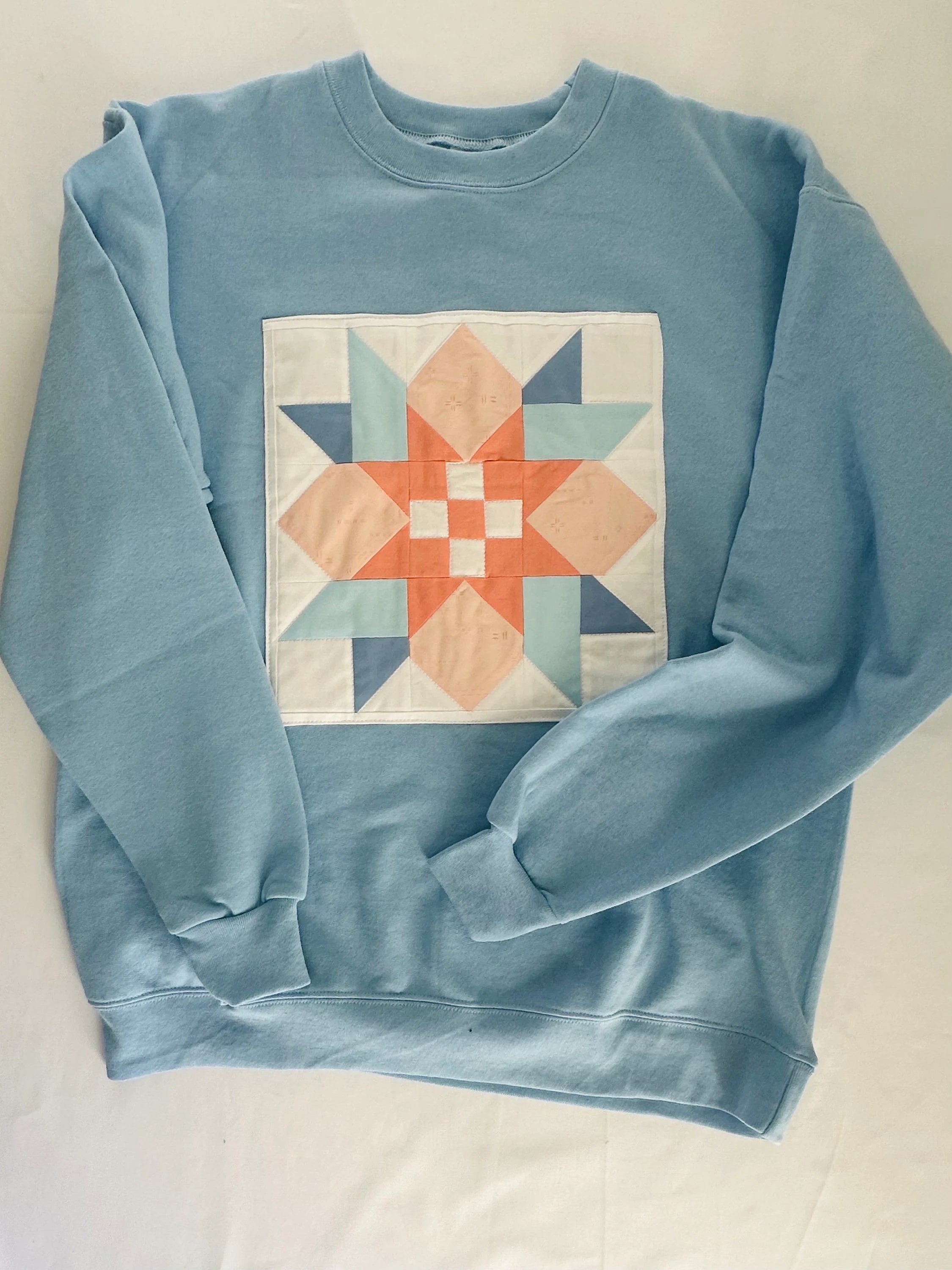
A quilt patch embroidered sweatshirt is an item that integrates the comfort of the quilting mindset with the visual depth of the embroidery technique, its impact being that the resulting item will be crafted to look, feel, and even experience like a handmade, artistic, and even sentimental piece.
Small squares, triangles, or patterned pieces of fabric are usually used in making quilt patches, which are sewn together to generate a decorative block. Once used in the form of patches in a sweatshirt, they are commonly supported with a stabilizer and sewn onto the clothing to be flat and maintain their shape. Embroidery directly over the patch of the quilt or along its edges is added afterwards to add to the design, fix the stitches, or add lettering motives or ornamental stitching.
The combination of textures, soft sweatshirt fleece, overlay quilting fabrics, and embroidered thread provides a distinctive dimensional appearance not similar to other styles of sweatshirts. This style of design is particularly fashionable in the homemade, cottagecore, or upcycled style of fashion, where uniqueness and artisanship are prioritized.
Quilt patch embroidered sweatshirts are not only used as a form of aesthetics but also have functional and decorative purposes. The patches, having quilted makmaterial, e the sweatshirt extra warm and extra reinforced due to its layer construction, and so it is better in cold weather or in garments that require a little more strength.
They are also a great use of old clothes, a way to use the blanket cherished by grandma, or the scraps of an old top that have holes in them, or to fix areas of a worn-out sweatshirt in a beautiful manner. Quilt patches in the fashion industry are used to make sweatshirts seem crazy quilt-grandma-crafted-- ideal for those who need a garment that appears homemade or which holds some significance to them. Quilt patch embroidered sweatshirt is worn comfortably but creatively, incorporating elements of both style and reinforcement in addition to creative reuse.
Cool Patches for Embroidered Sweatshirts

Embroidered sweatshirts are given personality, texture, and visual appeal in cool patches, which transform an ordinary garment into a statement one. These badges may feature a great variety of designs: retro-style badges and heavily styled icons, minimalistic forms, pop-culture references, and client personal monograms. The materials are also different: embroidered patches are the richest, chenille patches are sporty or athletic, leather or faux-leather patches introduce a rough touch, metallic-thread patches are glossy, and applique fabric patches are colored and have patterns. Several popular patch styles are 3D embroidered or holographic with layered mixed media to create a contemporary appearance in street fashion. These patches are added when embroidered sweatshirts are to be embellished, and when these patches are added, they complement and enrich the already existing stitches and form a layered pattern. They can be positioned strategically on the chest, sleeves, back panel, or pocket to create various styles, ranging from subtle and polished to bold and eye-catching.
The applications of the cool patches on embroidered sweatshirts are not confined to aesthetics alone; there are creative, functional, and expressive advantages to the use of the cool patches. In the case of fashion, they enable an individual to make custom sweatshirts in keeping with a personal preference- be it a cool, creative, sporty, retro, or whimsical one. Patches can be used on brands to emphasize logos, or they can include high-quality details that upscale the garment.
To express oneself, patches can be used in order to reflect interests, achievements, humor, or identity. Their practical purposes also include staining cover-ups, fixing worn locations, or strengthening those that undergo a great deal of friction. Cool patches can be used to revive old sweatshirts in an upcycled or sustainable fashion by making them feel new and special. Finally, cool patches are uniting style, storytelling, and functionality to make embroidered sweatshirts a personalized item that can be seen in daily attire and those based on fashion trends.
Chanel Patch Embroidered Sweatshirt
Chanel patch embroidered sweatshirt is a style of clothes that was first inspired by the image of the Chanel brand, which is based on its luxury textures, quilted patterns, pearls, monochrome palette, and typical elements of the double-C style. On authentic Chanel pieces, patches can be either textured boucle, quilt-like appliques, monograms made of metallic thread, or a high-end design element, e.g., camellias and chains. The patches are usually crafted using high-quality wool blends, tweed, velvet, or satin, and they are backed with fussy embroidery to give them the elegant couture appearance of Chanel. The combination of casual comfort and high-fashion design is achieved when it is integrated into a sweatshirt. The smooth knit and the heavily textured areas offer the sweatshirt a high-fashion look.
It is worth mentioning that genuine Chanel patches are to be applied to the authentic products of Chanel. In the case of non-Chanel clothes, sometimes the designers make Chanel-inspired, but unbranded patches that steal the fancy textures and patterns, but not the logos or registered designs. This will see to it that the style will capture high fashion without infringing on the trademark.
The applications of a Chanel-style embroidered patch on a sweatshirt revolve around adding grace, texture, and visual appeal. Inspired by the brand's Parisian style, many individuals take on the textures that came to symbolize the classic items of Chanel (tweed, pearls, quilting, simple geometric patterns, etc.) to reproduce the classic Chanel appearance in their own style and creativity. These patches have the ability to turn a plain sweatshirt into a stylish statement that fits in fashionable street wear, casual luxury wear, or high-low looks.
They are also able to provide structure and support to some sections of the sweatshirt, like pockets or sleeve sections, and at the same time have a nice look about them. Chanel-style patches in the custom or DIY fashion are also used by the creators to experiment with the couture style materials and classic color combinations such as black, white, beige, and gold. All in all, these patches serve to combine comfort and style to place embroidered sweatshirts in a higher-end, luxurious, and sophisticated position without infringing on the originality of the designs and, in fact, featuring the logo of a different company, which cannot be called Chanel.
Chenille Patch Christmas Embroidered Sweatshirt

A chenille patch for a Christmas embroidered sweatshirt is a blend of warm and fluffy chenille and an eye-catching holiday pattern to produce a warm-up garment of the season. Chenille patches, commonly found on jackets of the varsity, consist of soft loops of yarn that are used to create thick, plush letters, shapes, or motifs. In the case of Christmas sweatshirts, they are usually holiday themed, with patches in the shape of holiday symbols, like snowflakes, Christmas trees, candy canes, gingerbread men, Santa hats, or large letters in varsity style, such as JOY, MERRY, or NOEL. The chenille texture is a dimensional aspect, and it is also tactile, which contrasts with the smooth, sweaty garment and the hard outlines of the embroidery around it.
To give a festive appearance, designers usually add chenille to stitched details, sequins, metallic thread, or appliqué fabric. What comes out is a holiday sweatshirt that is nostalgic and high-quality, and appropriate to the warm and festive holiday spirit.
Chenille patch Christmas embroidered sweatshirts can be used in both fashion and functional ways. They are used in gatherings and Christmas dinners, family photos, and outings during holidays due to the textured patches that make the sweatshirt appear to be special as compared to the plain screen-printed one. They also last long and are soft, thus are suitable to be used in clothing that will be used over the years. They are popular among many people who use them as custom gifts, monograms, or names, or individual Christmas patterns to make the sweatshirt look special and close to the heart.
Practically speaking, the patches of chenille assist in reinforcing the underneath cloth, which also provides some thickness, which may prolong the life of the sweatshirt. They will be a trendy substitute to ugly Christmas sweaters, making them look more modern, pulled together, and stylish, and still capture the spirit of fun during the holiday.
Teacher Patch for Embroidered Sweatshirt

A teacher patch embroidered sweatshirt is a custom garment design that is a blend of decorative embroidery with patches depicting education, teaching, or school life. They are usually composed of strong materials such as twill, felt, or chenille and may have all sorts of motifs such as apples, pencils, books, chalkboards, or inspirational quotes. Other teacher patches can also have monograms, grade, or classroom-related imagery to customize the sweatshirt to each teacher. Applied to a sweatshirt, these patches can either be sewn or ironed on and give the garment a texture, color, and dimension.
Embroidered details, including outlining the patch, shading, or stitching a name of a teacher, help improve the overall appearance and develop a professional yet entertaining look, meaning both stylish and significant. Embroidery and patchwork are combined, which guarantees the design to be both visually conspicuous and long-lasting, which could be repeated in a school setting.
The applications of the teacher patch on embroidered sweatshirts are functional and expressive. They can be a really good present to teachers, whether it is Teacher Appreciation Week, end-of-year gifts, or some personal accomplishment. The patches enable the teachers to be proud of their profession and, at the same time, comfortable and easy-going in a school or informal environment. In functionality, patches strengthen the sections of the sweatshirt, which makes it sustainable when it comes to regular washing and regular use in the classroom. They also offer the option of customizing a piece of clothing, and every sweatshirt is individual to the personality, subject, or level of the teacher.
These patches, in certain instances, are used to engage in a conversation with students or fellow employees, and this facilitates a favorable and welcoming classroom atmosphere. In general, teacher-patch embroidered sweatshirts are a combination of functionality, customization, and style that any teacher can consider an intelligent and valuable addition to their wardrobe.
Cute Iron-on Patches for Embroidered Sweatshirts

Cute patches of iron-on embroidered sweatshirts are an easy and effective method of personalizing and enlivening a casual outfit with pretty, eccentric collections. Such patches are usually crafted out of fabric and have an adhesive backing that activates through heat so that they can be put on in a few seconds using an iron or a heat press, and do not necessarily need any sewing. Hearts, stars, animals, food objects such as cupcakes or ice cream, flowers, cartoon characters, inspirational sayings, and graphics that are pastel or rainbow are some of the popular motifs.
The styles tend to be striking in color, lightweight lines, and cute patterns that attract a young, carefree style. Like iron-on patches with embroidery, these patches may be used to either add to the stitching or may be used as the focus of the embroidery, as well as provide layers, dimension, and a tactile experience to an otherwise dull sweatshirt. They can be fitted anywhere; on sleeves, on the chest, back, or even on the hood, making them look very cute and catching the eye.
The applications of cute iron-on patches on embroidered sweatshirts have their major applications in personalization, fashionability, and customization. They enable the wearers to reflect their personality, hobbies, or favorite themes without making any long-term changes, as they can constantly be repositioned or removed where necessary.
Iron-on patches would work well when creating a homemade craft, a present, or to give a sweatshirt a seasonal or thematic motif, like a holiday design, a birthday theme, or a fun summer design. They also have the ability to fix minor stains, slight tears, or wear, which will lengthen the life of the garment,, making it appear new and stylish. To kids, adolescents, or adults who want something playful, laidback, and easy to wear, iron-on patches that are cute will offer them an inexpensive and low-commitment manner of making sweatshirts unique, attractive, and full of personality.
Christmas Patches for Embroidered Sweatshirts

Embroidered sweatshirts are festive patches that are used to add a festive element and seasonal touch to casual wear. Such patches are typically of sturdy materials like twill, felt, or chenille and may be embroidered, appliqued, or both to come up with visually appealing designs. Such themes as Christmas trees, Santa Claus, reindeer, snowflakes, stockings, candy canes, ornaments, wreaths, and phrases like Merry Christmas or Joy are used. Metallic threads, sequins, or glitter are also featured in most patches to add additional shine to them, which makes them noticeable on a plain sweatshirt. They may be sewn to be worn long-term or ironed on using iron-on adhesive to be worn for a shorter time and in a more DIY-friendly manner. These patches have colorful designs and 3D textures that are used to match the softness of the sweatshirts to make them pretty, party dresses during a holiday party or family photo, or to wear during winter.
Embroidered sweatshirts use Christmas patches to create ornaments as well as utility. Fashion-wise, they enable one to make the holiday season a fun, personalized experience, which gives the person an alternative to the old-fashioned holiday sweaters. Older sweatshirts can also be reused by applying seasonal designs to them, filling in stains, damaged spots, or plain areas. To the DIYer, these patches mean that one can easily make a personalized holiday-themed clothing or gift without having to thoroughly learn to sew. Sewn-on patches can provide reinforcement to commonly used parts of the sweatshirt so as to make it wear longer. All in all, Christmas patches are a combination of festive looks and new, even more utilitarian advantages, so the wearers can have a warm, jovial, and fashionable holiday appearance, as well as demonstrate creativity and personal preferences.
Does Rush Patch make custom patches?
Rush Patch is the company that deals with the production of custom patches for a great variety of applications, such as embroidered, chenille, PVC, woven, and iron-on patches. They serve consumers, organizations, sports teams, schools, and hobbyists, enabling their customers to come up with their own designs
https://rushpatch.com/
Conclusion:
The patches can be subtle (a cute Iroiron-ontch to embroidered sweatshirts) or bold (a quilt patch embroidered sweatshirt or a Chanel-inspired patch sweatshirt), so that custom patches can be used to showcase your own personal style. You can make your own or have them ordered by a company such as RushPatch, and they are free to do as you wish, but do it correctly (sew or iron-on) to ensure they last a long time. Even with the simplest and most mundane sweatshirt, with some skill and ingenuity, you can make a work of wearable art out of it.
Rush Patch makes high quality and affordable custom patches for retailer, wholesaler, and brands as well. If you need any kind of embroidery, chenille, custom patches, drop us a line for that.
FAQ’S
Q: Does Rush Patch make custom patches?
A: Yes, RushPatch offers custom embroidered, woven, PVC, chenille, leather, and printed patches, with no big minimum order and multiple backing options, including iron‑on, sew‑on, adhesive, or Velcro.
Q: How do I add a patch to a sweatshirt?
A: Use either the iron-on method (heat + pressure) or the sew-on method (stitch around edges). Iron-on is quick; sewing offers more durability.
Q: How to create a custom patch?
A: Design or digitize artwork, choose base material and thread, decide on backing (iron‑on or sew‑on), and get it embroidered by a patch maker or DIY if you have embroidery tools
Q: Is it better to sew or iron-on a patch?
A: For longevity and frequent use: sew-on (or iron-on + sew). For convenience or temporary decoration, iron-on suffices.
Q: Can I use suede elbow patches or similar patches on embroidered sweatshirts?
A: Yes, as long as the base fabric is suitable for the bonding method (sew or heat). For heavy or textured patches like suede elbow patches for embroidered sweaters, sewing is likely the safer route.
